September 2026
Many in the roofing industry are still confused about one critical detail in Electronic Leak Detection (ELD): where the conductive medium belongs within a conventional roof assembly. This isn’t a minor technicality. It determines whether ELD testing is valid or meaningless.
Why Conductivity Matters
Both high voltage and low voltage ELD rely on one basic principle: electricity must travel to a conductive substrate to identify breaches in the membrane.
In most waterproofing applications, the membrane is installed directly over structural concrete. Concrete is naturally conductive, so ELD works as intended.
However, in conventional roofing assemblies, new construction and re-roof projects, the membrane is often installed over coverboard. Coverboard is an electrical insulator, meaning it blocks any electrical current. Without a conductive substrate directly beneath the membrane, ELD cannot function properly.
To make ELD valid in these assemblies, a conductive medium, such as TruGround, must be installed on the non-conductive substrate located directly below the membrane. This requirement is clearly defined in ASTM D7877, published in 2014. This standard clarifies proper methodology and confirms that conductivity directly beneath the membrane is mandatory for reliable testing.
How the Industry Got Here
ELD was introduced in the 1990s, before clear standards existed. Without defined guidance, misinformation spread:
-Some were told the conductive medium could be placed below coverboard or insulation but were not informed ELD testing would be invalid.
-Others were told a conductive medium wasn’t required at all which defies the scientific principles behind ELD.
-Specifications were copied and reused without understanding the science which results in costly, ineffective leak detection testing.
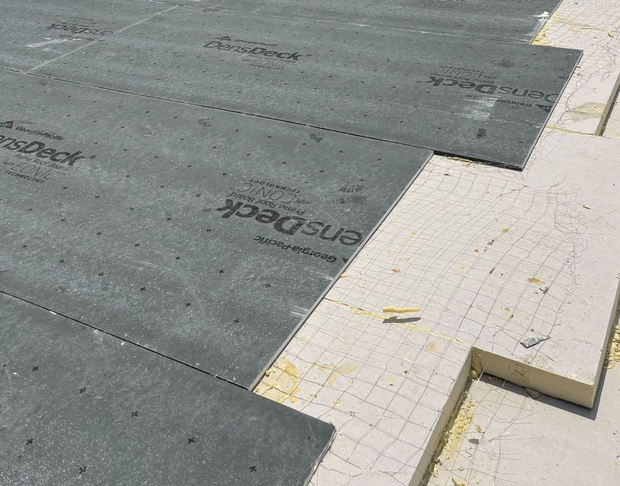 Mesh below the coverboard – improper placement of a conductive medium
By the time ASTM standards clarified the requirements, incorrect practices were already widespread. The results?
-Billions of dollars in roofing installed with invalid or inconclusive ELD testing.
-Useless warranties are issued after unreliable testing.
-Contractors repeatedly being called back to locate leaks in roofs that had already “passed” ELD testing.
-Building owners left paying for the consequences of hidden moisture from their buildings being built wet.
When testing is performed without proper conductivity directly below the membrane, it will create a false sense of security rather than true quality assurance.
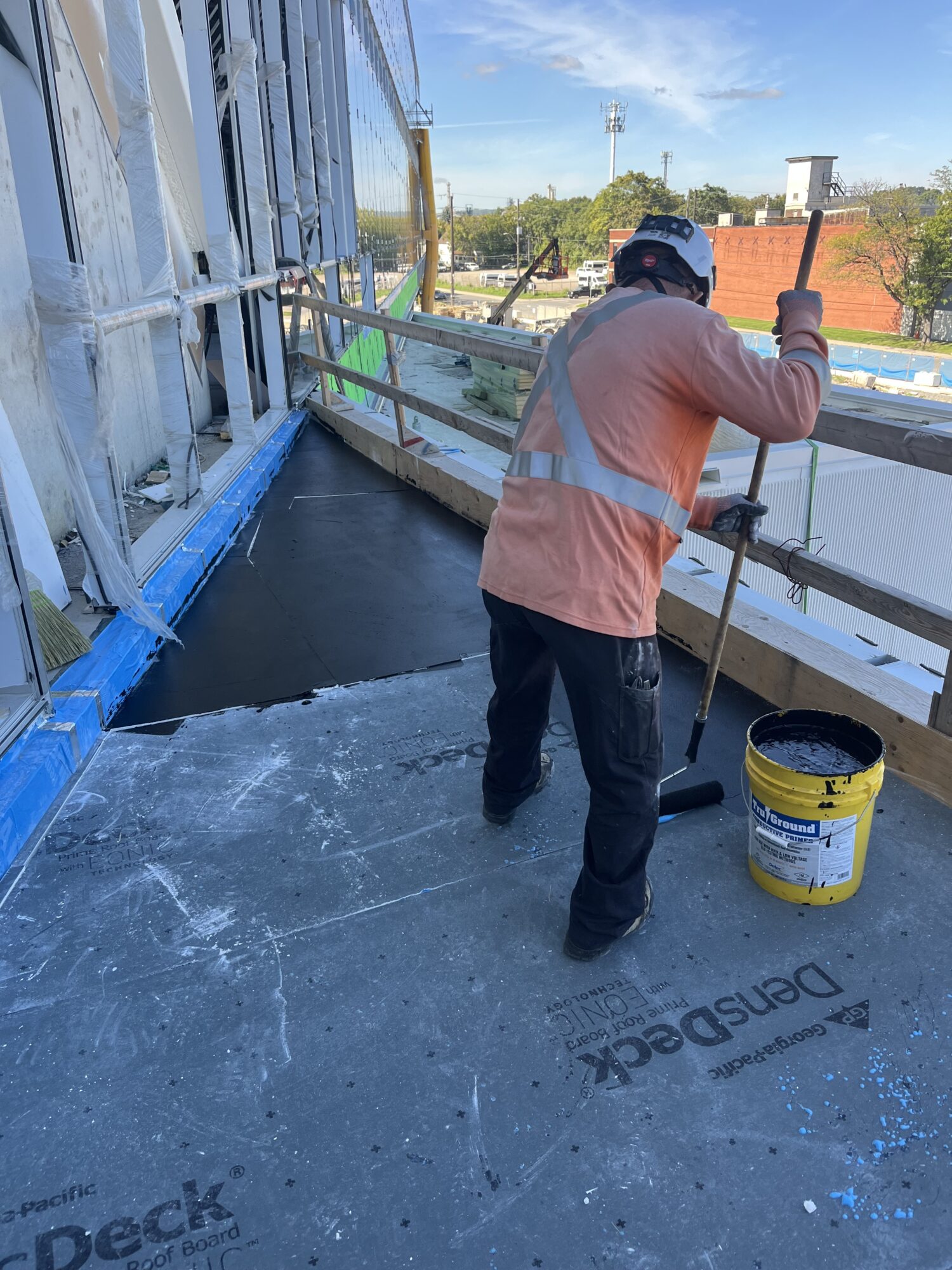 TruGround directly below the membrane – proper placement of a conductive medium
Trust the Science
Electronic Leak Detection is not subjective. It is governed by physics and defined by industry standards. This discussion is not about promoting one testing method or one conductive medium over another. It’s about ensuring that ELD is:
-Scientifically valid
-Code compliant
-Fully transparent
When ELD is performed correctly, it is one of the most powerful quality control tools in roofing. When performed incorrectly, it becomes an expensive formality that provides no value and false confidence.
The industry deserves better.
Actionable Steps for Project Teams
If you are involved in roofing design, construction, testing, or ownership, here’s what you can do:
-
Verify Conductivity of the Substrate – Confirm that a conductive medium is located directly beneath the membrane in conventional roof assemblies. If the substrate is non-conductive (ie. coverboard, insulation, wood, LWIC), a conductive medium must be added.
-
Reference ASTM Standards in Specifications – Ensure your project specifications explicitly reference ASTM D7877 and ASTM D8231 and require compliance.
-
Require Written Methodology from the ELD Agency – Ask the testing agency to define the test method being used, confirm conductivity requirements, state limitations in writing, verify adherence to ASTM standards
-
Obtain Manufacturer Approval – Membrane manufacturers should test and approve any conductive mediums used within their assemblies, and provide documentation confirming compatibility
-
Educate Architects, GC’s, Manufacturers, Contractors and Owners – Make sure everyone understands ELD requirements, options for ELD, and limitations of ELD testing performed
-
Demand Transparency – Quality assurance is not marketing. Rely on the science of ELD, published standards, technical bulletins, verifiable documentation
Do NOT rely on dubious sales claims regarding how many millions of square feet have been tested. The ELD solution isn’t complicated and is based on science. It starts with accountability at every level of the project team.
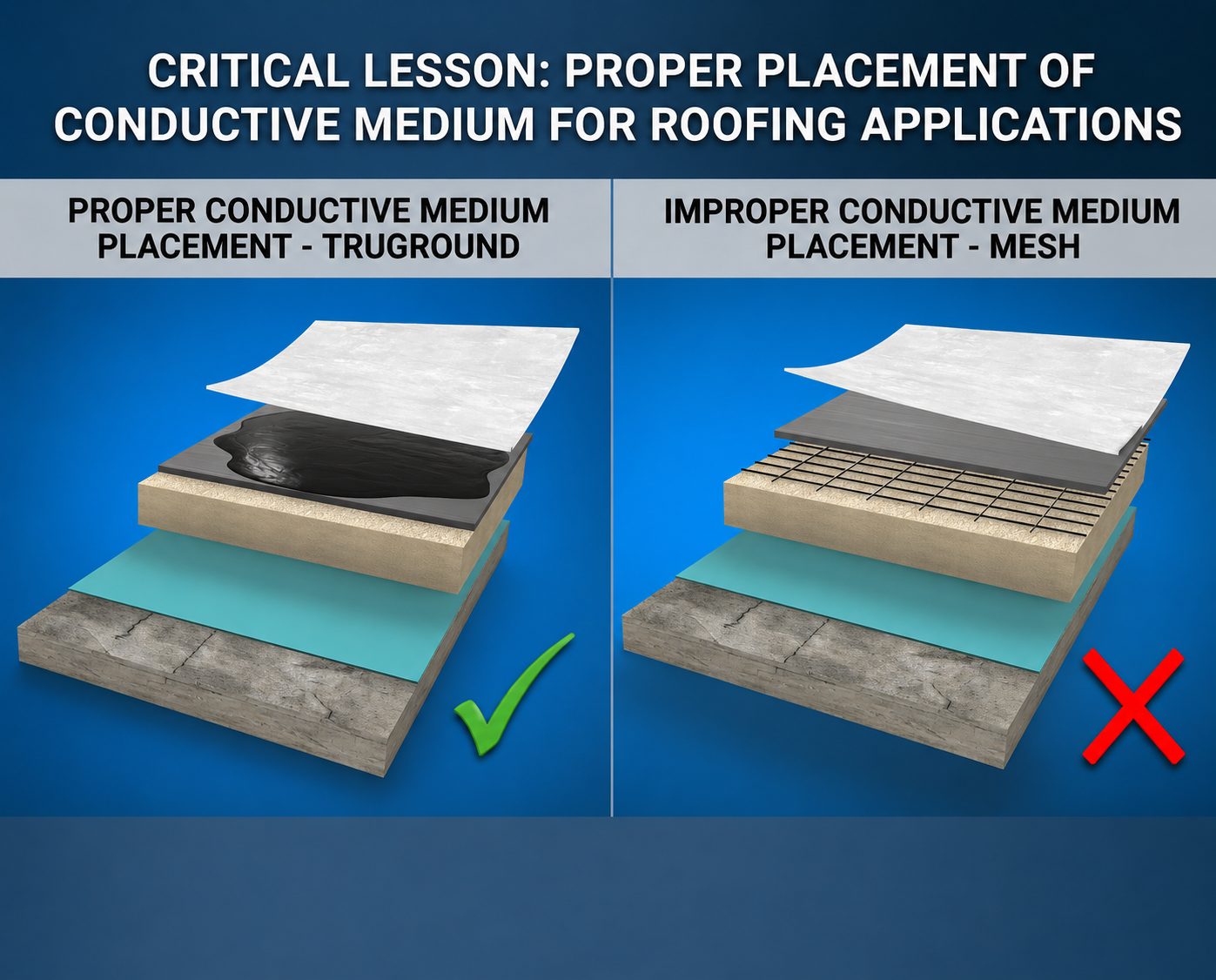 Valid vs Invalid – conductive mediums must be installed directly below the membrane for valid QC

Related Articles
-

Building It Dry: The Case for Real-Time Moisture Monitoring During Construction
-
Electronic Leak Detection: Facts, Physics, and False Claims
-
Specifying Electronic Leak Detection (ELD): Best Practices in Division 07 Specifications
-
Electronic Leak Detection vs. Flood Testing: A Modern Standard for Waterproofing Integrity